Approved by : Ministry of Tourism, Govt. of India and All India Tourist Association.
TAJ MAHAL TOUR
GOLDEN TRIANGLE
REDISCOVER RAJSTHAN
PILGRIMAGE TOUR
SHORT TOURS
CAR RENTALS IN INDIA
AIRPORT TRANSFER SERVICES
HOTELS IN DELHI
AIRPORT TRANSFER
Airport to hotel
Hotel to Airport
Rs. 500 for 4 person
Rs.700 for 5-8 person


Package 2

Destinations Covered: Delhi - Jaipur - Delhi

Early Morning Drive to Jaipur.

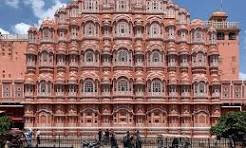
Day tour of famous monuments of Jaipur including the Hawa Mahal & Amber Fort.

Late Evening drive back to Delhi.
 

Package 3

Destinations Covered: Delhi - Haridwar - Rishikesh - Delhi

Early morning drive to Haridwar.

Have a holy bath in Ganges, visit temples and other pilgrimage places and after lunch proceed towards Rishikesh, visit other pilgrimage places and in the evening drive back to Delhi.
 

Package 4

Duration: 1 night / 2 days
Destinations Covered: Delhi - Haridwar - Mussoorie - Delhi

Day 01: Haridwar
Early morning drive to Haridwar.

Have a holy bath in Ganges, visit temples and other pilgrimage places and after lunch proceed towards Mussoorie, overnight at Hotel.

Day 02: Mussoorie - Delhi
Full Sightseeing at Mussoorie, late evening drive back to Delhi.
 

Package 5

Duration: 6 night / 7 days
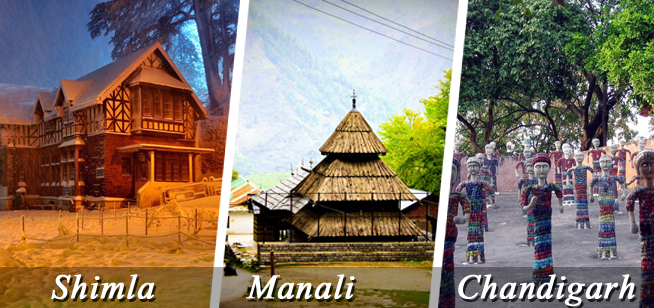
Destinations Covered: Delhi - Shimla - Manali - Chandigarh - Delhi

Day 01: Delhi
Arrive Delhi. Assistance on arrival and transfer to Hotel.

Day 02: Delhi - Shimla
By covering train.

Day 03: Shimla
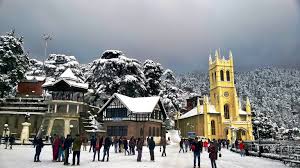
After breakfast proceed to shimla tour Sight seeing of Lakkar Bazar,The ridge, Jakhoo, The Glen , Prospect hill and Kamna Devi. Overnight at hotel.

Day 04: Shimla - Manali
By covering road Overnight at hotel.

Day 05: Manali
Morning breakfast proceed to manali Sight seeing of hadimba temple, Manu Temple, Vashisth.

Day 06: Manali - Chandigarh
Sighting in Chandigarh.

Day 07: Chandigarh - Delhi
Transfer to Delhi & transfer to International airport for onward Journey.
 

Package 6

VAISHNO DEVI TOUR PACKAGES

Duration : 3 Days / 2 Nights
Destinations Covered : Delhi - Jammu - Katra - Vaishno Devi - Delhi

Vaishno Devi is perhaps the most popular pilgrimage for the Hindus of North India. Millions of pilgrims come to the state of Jammu & Kashmir to take blessings of Goddess Vaishno Devi every year and the numbers are increasing with the time. Indianvisit gives you an opportunity to visit Vaishno Devi in a hassle free manner with all the modern facilities in tandem. The package is designed in such a way that your pilgrimage to the home of Goddess Vaishno Devi would be smooth.

Day - 1 - Delhi - Jammu
Today catch train Jhelum Express to Jammu. Overnight onboard the train.

Day - 2 - Vaishno Devi Shrine - Katra
After the Darshan trek back to Katra. Have breakfast and lunch at hotel. After lunch we shall drive you back to Jammu to catch Jhelum Express to Delhi. Overnight on board the train. Guide Map of Jammu & Kashmir

Day - 3 - Arrive Delhi
Today arrive Delhi and be transferred to home / hotel
 

Package 7

Other Shrines at Vaishno Devi

Bhumika Temple
The legend goes that Vaishnavi, a devotee of Lord Vishnu, used to pray to Lord Rama at Darsani Darwaza, 1 Km from Katra. She had taken vow of celibacy. Bhumika Temple is situated at this place.

Ban Ganga Temple
One day, Bhairon Nath — a demon — saw and chased her. While fleeing, Vaishnavi felt thirsty and shot an arrow into the stone. A holy river was produced, known as Ban Ganga. Most pilgrims take bath here. Ban Ganga Temple is about 3 Km from Katra.

Charan Paduka Temple
This is where the Goddess stopped for some time while Bhairon Nath was chasing her. Her footprints are supposed to be visible on a stone at this place. Charan paduka means "holy footprints". Charan Paduka Temple is about 1.5 Km from Ban Ganga at 3,380 feet.

Ardh Kuwari
Vaishnavi then meditated for nine months in a 15-foot-long cave — Garbha Joon — at Ardh Kuwari. This is the halfway point and some pilgrims stay here for the night. The cave is narrow, and you have to almost crawl all the way though it.
It took Bhairon Nath nine months to locate her. When Bhairon Nath entered the cave, the Goddess blasted a new opening with her trident at the other end of the cave and fled. Ardh Kuwari is 4.5 Km from Charan Paduka and 4,800 ft above sea level.
After Ardh Kuwari the path gets very steep for 2.5 Km. This ascent is called Hathi Matha ascent, because the mountain is shaped like the forehead of an elephant.

Bhairon (Bhairav) Temple
After blasting an opening on the other end of the cave, the Godess assumed the form of Maha Kali and cut off Bhairon Nath's head that fell at the place where Bhairon Temple is now located.
The boulder at the mouth of the holy cave, according to the legend, is the petrified torso of Bhairon Nath who was granted divine forgiveness by the benevolent Mata in his dying moments. She gave blessing that the desires of her devotees who visit this place would be fulfilled.
This temple is about 2.5 Km from Vaishno Devi cave at about 6,700 feet. It is traditional to visit this temple after visiting the Vaishno Devi Temple.

Sri Ram Temple
The Sri Ram Temple is near Vaishno Devi cave. There is a Shiva-linga in a cave 125 steps down from the Ram Temple. The prominent temples that the Kangra valley, in Himachal Pradesh, is famous for are Jwalaji, Brajeshwari, Chintpurni and Naina Devi.

There are fascinating legends associated with these shrines, the most popular of them being that of King Daksh. The story goes that the arrogant king did not invite Lord Shiva, his son-in-law to a 'yagna'. Consequently his daughter Sati, utterly humiliated, plunged into the sacrificial fire. Shiva arrived on hearing this, only to find his beloved half burnt.

Enraged he carried her charred body and broke into the 'tandava nritya', the awesome dance of death. Her charred remains — tongue, breasts, feet and eyes fell at four places to form the four pilgrimage sites — Jwalamukhi, Brajeshwari, Chintpurni and Naina Devi.

Jwalaji
Jwalamukhi Temple is perched on a ridge called Kali dhar. The shrine has a gilt dome and soaring pinnacles. Inside is a square pit, three feet deep with a pathway all around. The rock in the middle has a crack, through which a gas is emitted, and on lighting it the gas bursts into a huge flame. The priest keeps applying the flame to the gas — which is seen as a blessing of the deity.
The shrine has no idol as such, the emanation of the gas is believed to be a manifestation of the goddess Jwalaji.

Jwalamukhi is said to be the spot where the half-burnt tongue of Sati fell, hence the burning flames or 'tongues' of fire. Mughal Emperor Akbar visited the temple with Jodha Bai and presented a solid gold umbrella to the shrine, which can be seen even to this day. The King of Nepal presented a magnificent bell, which adorns the front hall. Milk and water is offered to the flames, the 'puja' going on for the whole day.
Jwalaji is 473 Km from Delhi and 212 Km from Shimla.

Brajeshwari Devi
Brajeshwari Devi Temple, located in the old Kangra township, is said to have been built over the charred breasts of Sati. This shrine, once renowned for its great wealth, has been plundered relentlessly over the ages.
The first of the plunderers was Mahmud of Ghazni, who looted it in 1009. A mosque was built on the ruins and a garrison was left behind. 35 years later, the local king regained its possession. The shrine was repaired and a replica of the idol was enshrined. The temple was filled with gold, silver and diamonds only to be ransacked again in 1360 by Firoz Tughlaq. Later Emperor Akbar visited the shrine with his dewan, Todar Mal and restored it to its former grandeur.
The temple was razed to the ground by an earthquake in 1905, but a new one came up the very same year, thanks to the Kangra Restoration Committee.

Naina Devi
Naina Devi Temple is located atop a hill, commanding an awesome view of the Punjab plains on one side and the Gobind Sagar lake on the other. This is the spot where Sati's eyes — nain — are believed to have fallen.
Some devotees cover the last few miles of the climb by crawling up. This method is called 'sashtang dandvata'. The puja is performed by thirty priests. The temple is also frequented by Sikhs. Guru Gobind Singh is believed to have spent a few days here.

Chintpurni
Chintpurni Temple stands on the spot where the charred feet of Sati fell. The 'Pindi' or the stone hall symbolises her feet. The Chintpurni 'mantra' is very popular with devotees.

Chamunda Devi
Also known as Chamunda Nandikeshwar Dham, it is situated on the banks of Ban Ganga. This Sidhapeeth is a place where saints and priests pray amidst natural surroundings.
This is the place where the demons Chand and Mund came to conquer Devi Mahakali. In the fight that ensued, the Devi cut their heads and presented these to Maa Ambika, who in turn told Mahakali that you will be worshipped as Chamunda Devi.

Kangra Devi
The Goddess, located in the town of Kangra is also called Vajreshvari. It is believed that when Sati's body was cut into different pieces the remaining part stayed in this place.
Food offerings are divided into three parts. One part each for Mahalakshmi, Mahakali and Mahasaraswati.